The Horizon
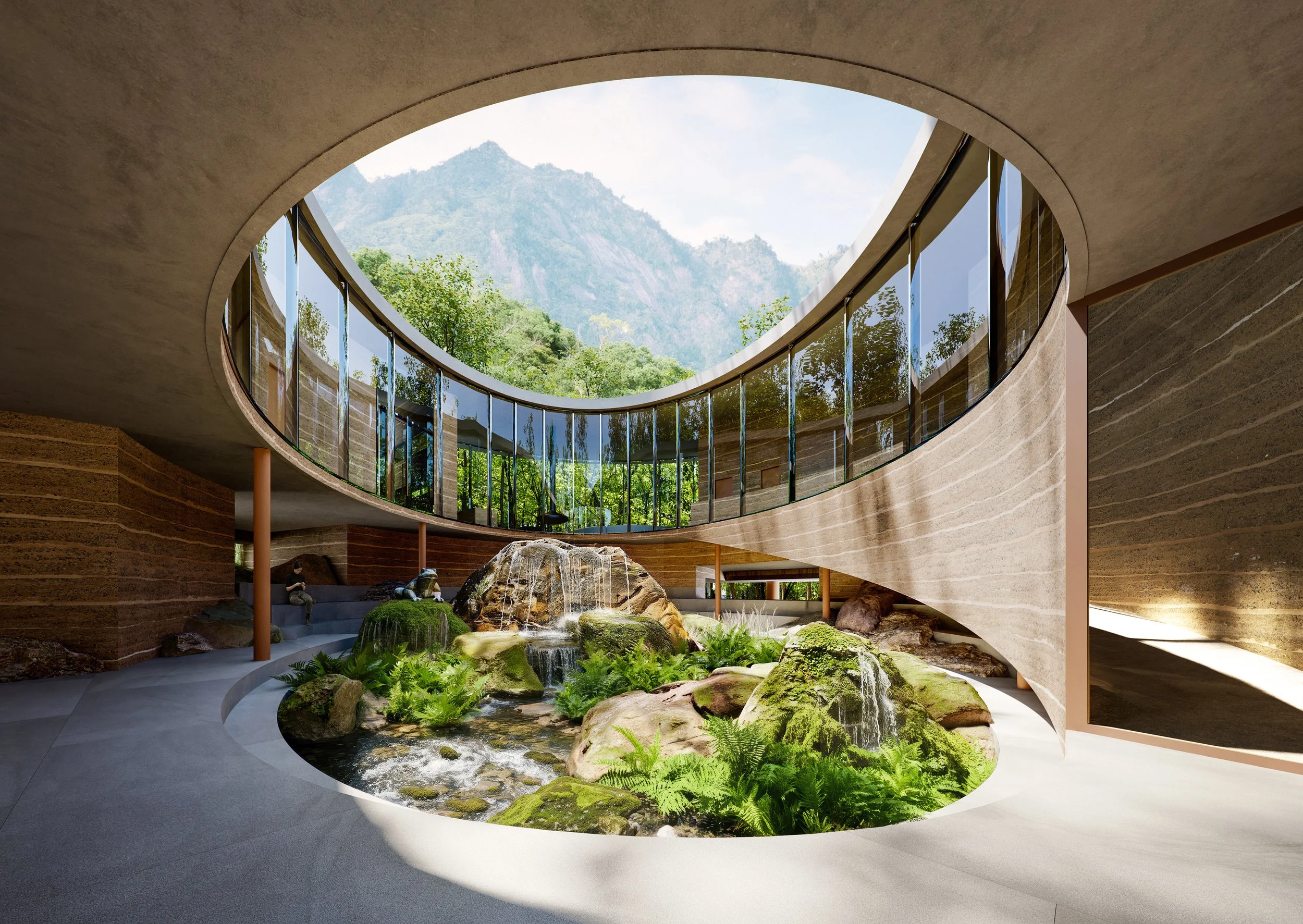
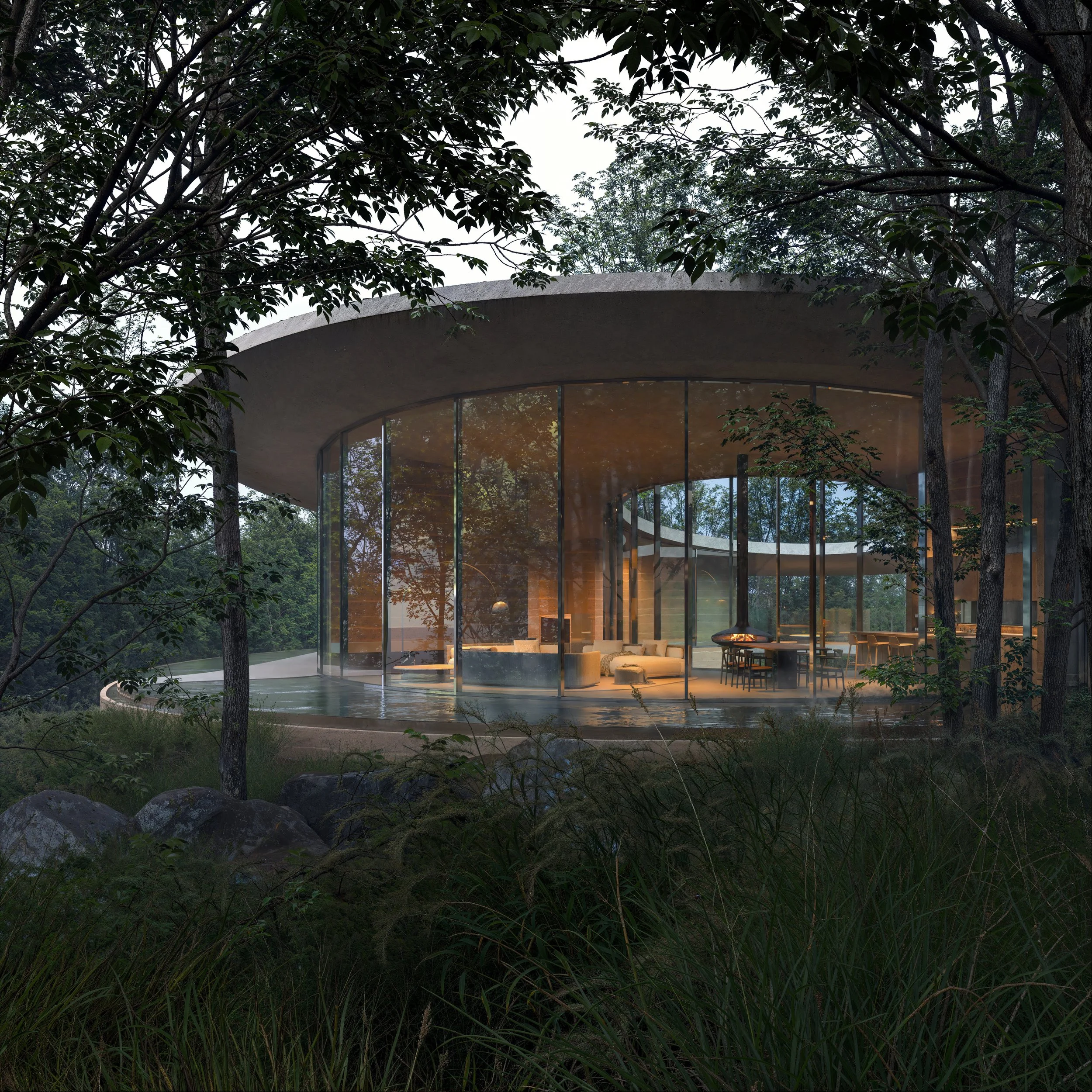
Designed by Joyce Yang Architects for the renowned Not A Hotel Competition, The Horizon is conceived as a rainforest residence shaped by its natural context.
Organized around native granite boulders, the project integrates rainwater, wind, and passive design through a three-ring spatial logic, aligning architecture with climate and landscape to create a cohesive living environment.
We were commissioned to develop both the interior and exterior imagery for the project, establishing a cohesive visual narrative across all spaces. Building on these assets, we translated the still imagery into a cinematic film, bringing the project to life with clarity and intent.
The Horizon
Residential | Architectural Competition Entry
Yakushima, Japan,2025
Client
Joyce Yang Architects
Architecture
Joyce Yang Architects
Landscape design
Joyce Yang Architects
Interior Concept Design
Joyce Yang Architects
Film
Panoptikon
Deliverables
CGI Stills, Film
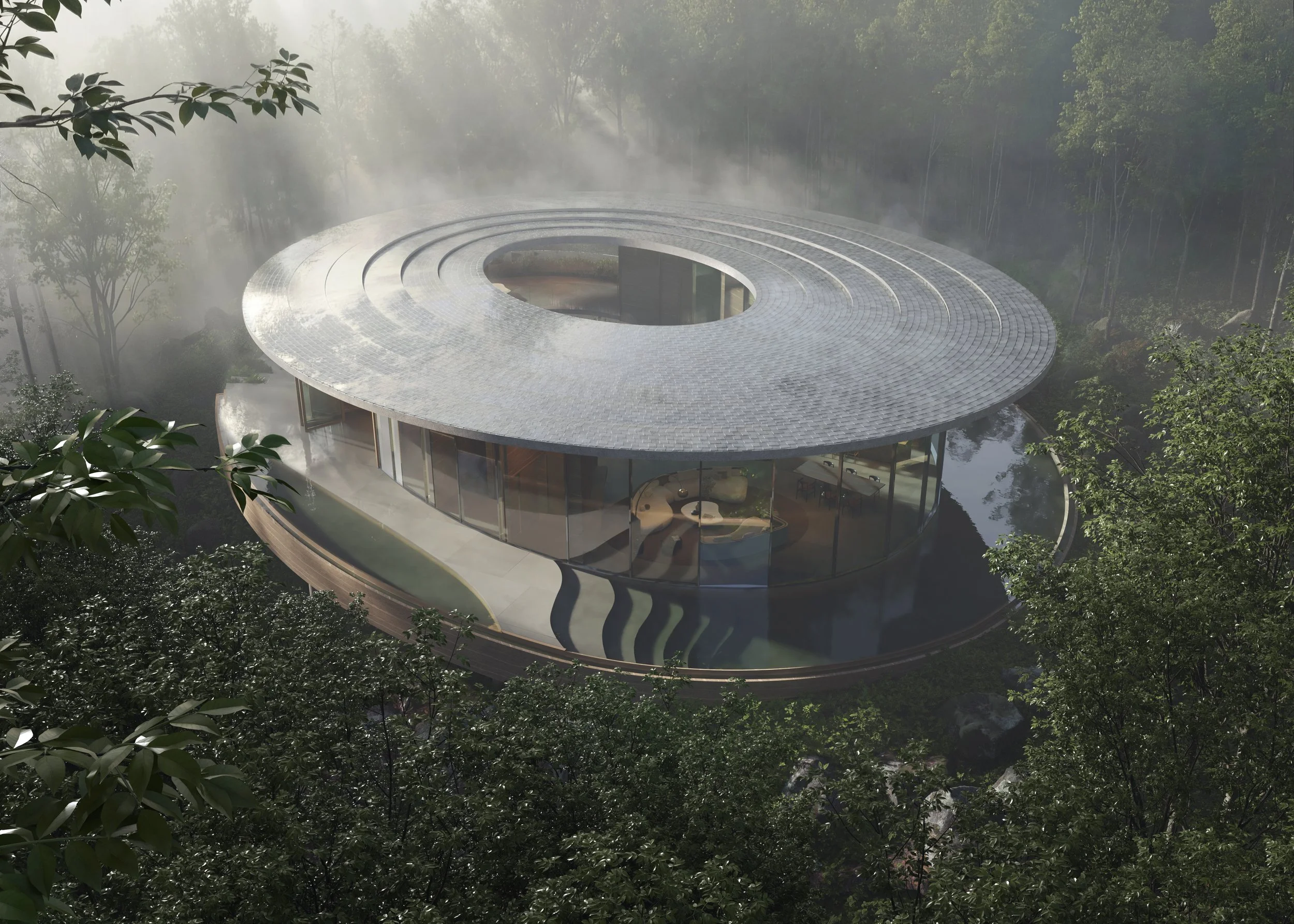
Yakushima is defined by its ancient rainforests, steep topography, and intense rainfall: an environment shaped by granite uplift and continuous natural forces.
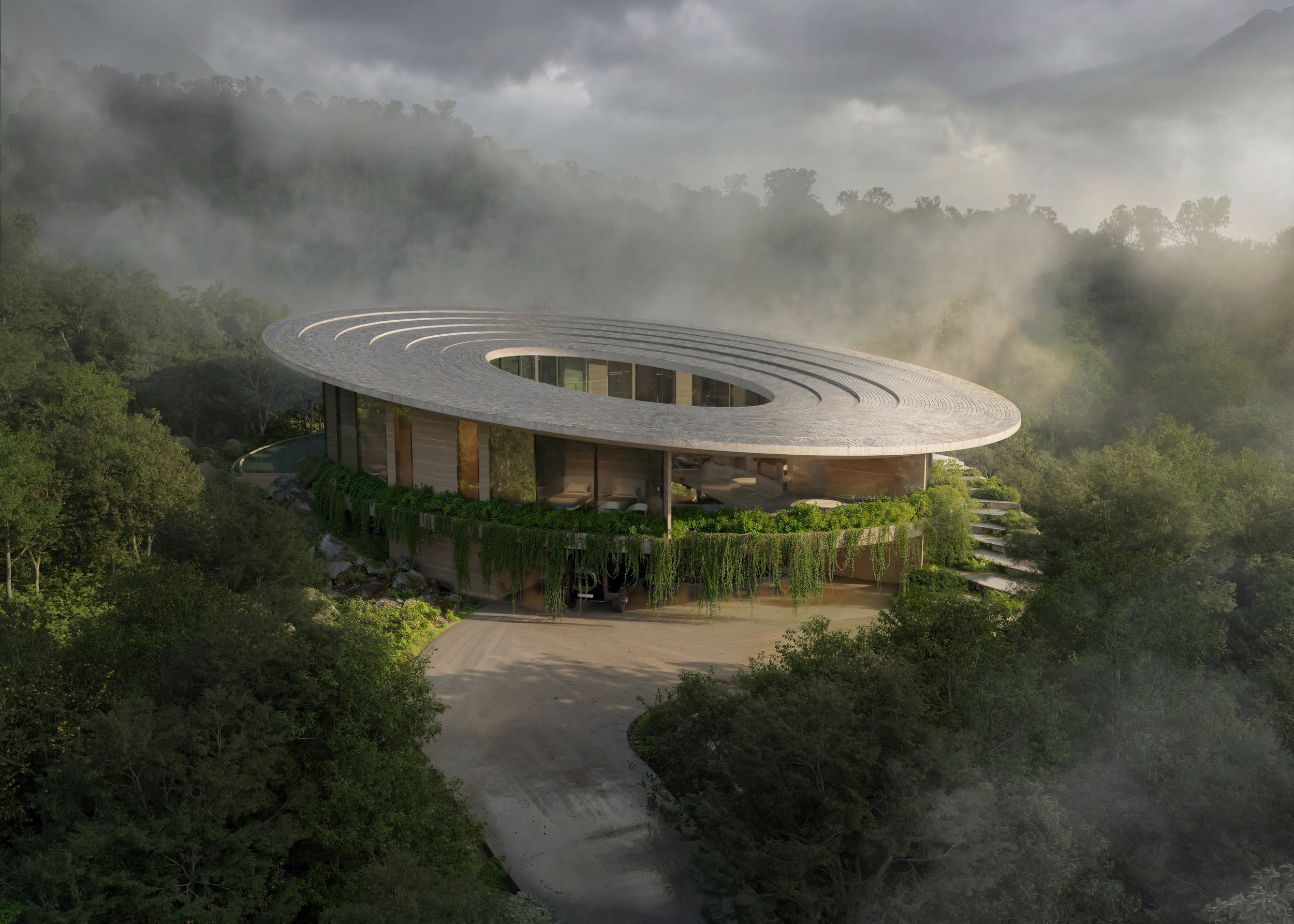
The project responds by opening itself to both forest and horizon. Conceived as a composition of interlocking solids and voids, the architecture frames light, wind, and rain as integral elements of daily life. Its form follows the natural contours of the site, minimizing intervention and allowing the building to settle with precision into the landscape.
Elevated above ground, the structure accommodates the island’s heavy rainfall,allowing water to pass beneath while reducing prolonged exposure to moisture and mist.
Dissolving Boundaries
The house is conceived not as an object within the forest, but as a condition of inhabiting it. Boundaries dissolve through courtyards, openings, and layered thresholds, allowing interior and exterior to operate as a continuous spatial experience.
Rain, mist, and shifting weather are not mitigated, but integrated, becoming atmospheric drivers that shape how the space is perceived and lived.
The result is a quiet, immersive retreat, an architecture that aligns with Yakushima’s ancient presence rather than asserting itself against it.
Framing the Landscape
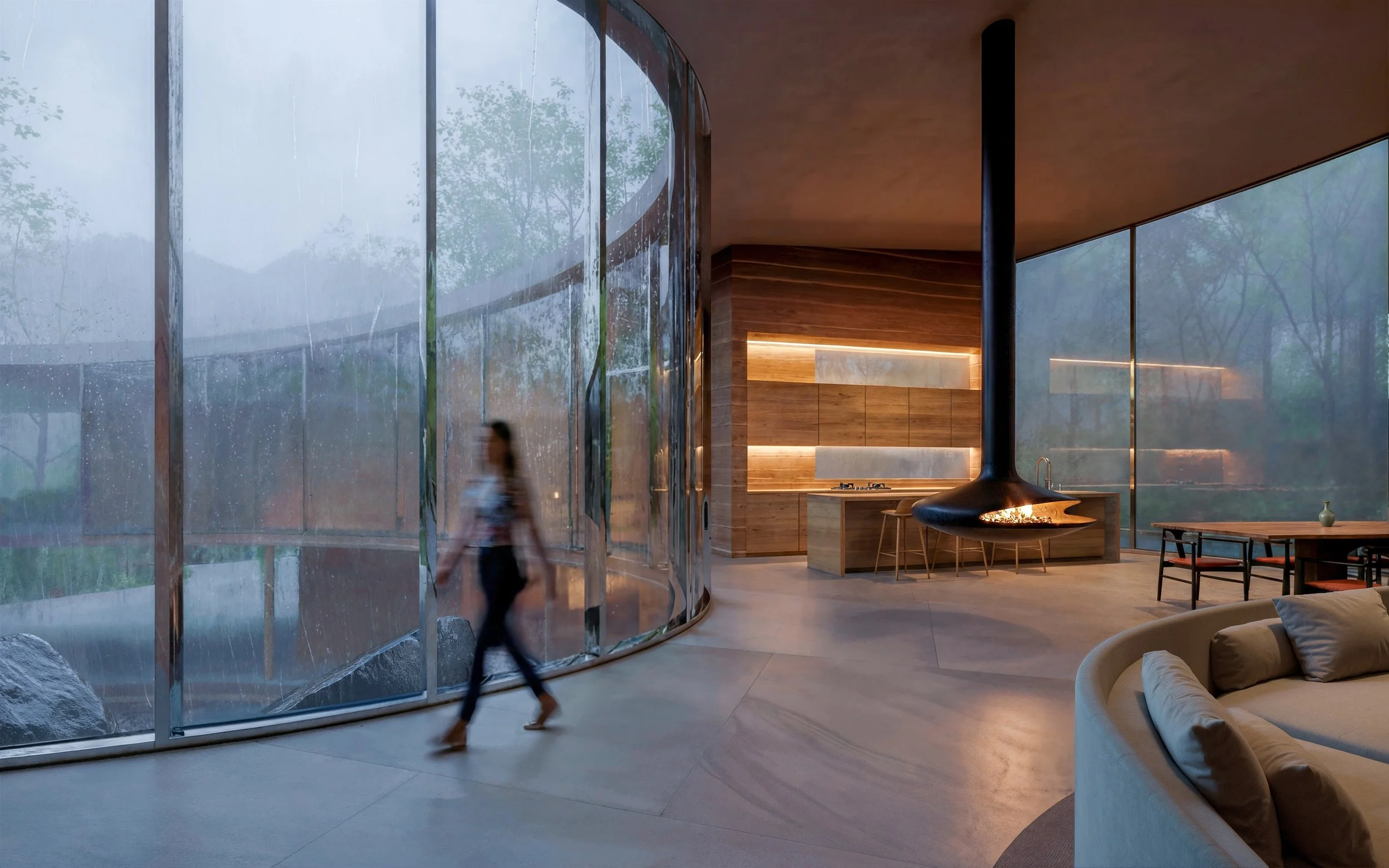
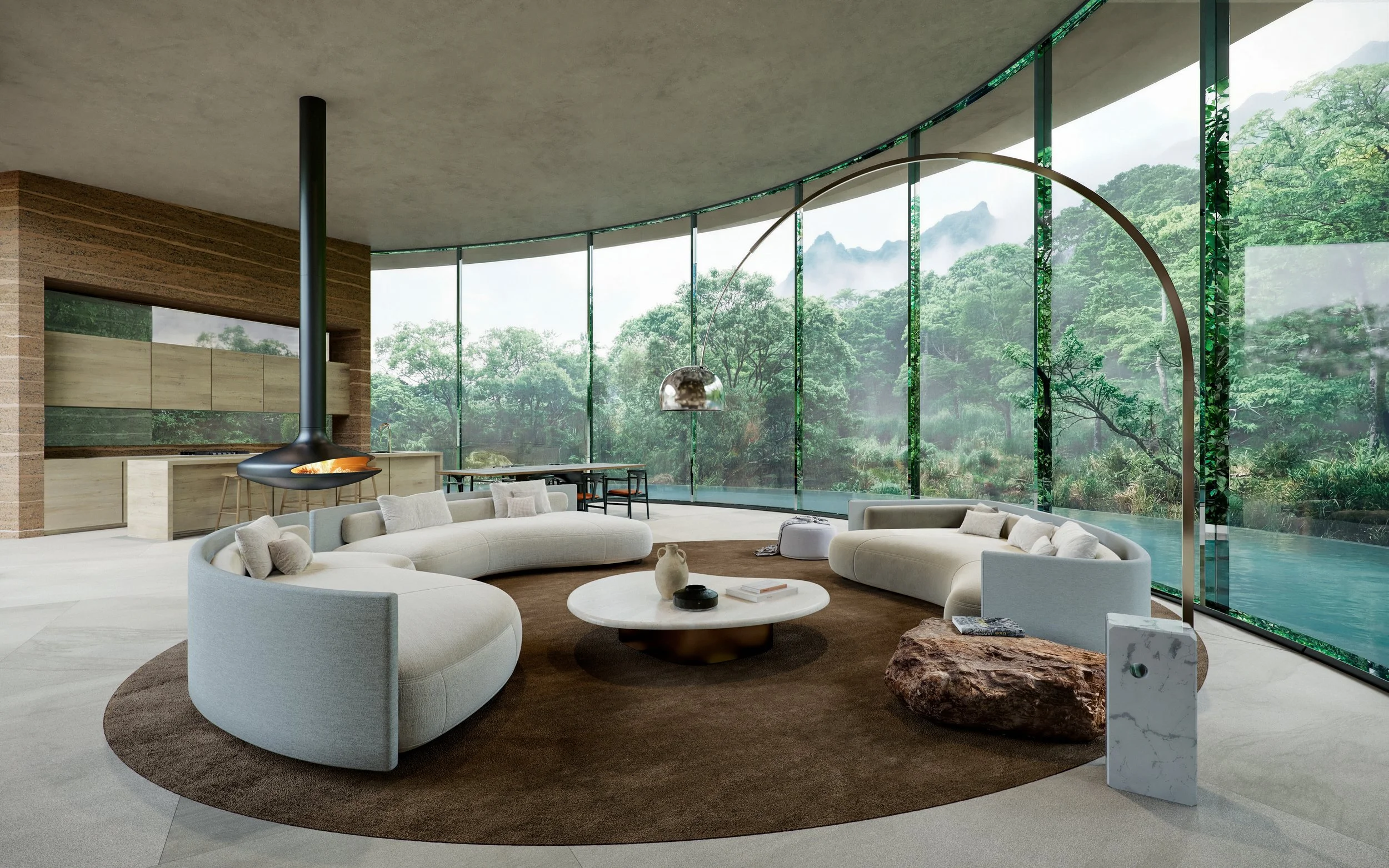
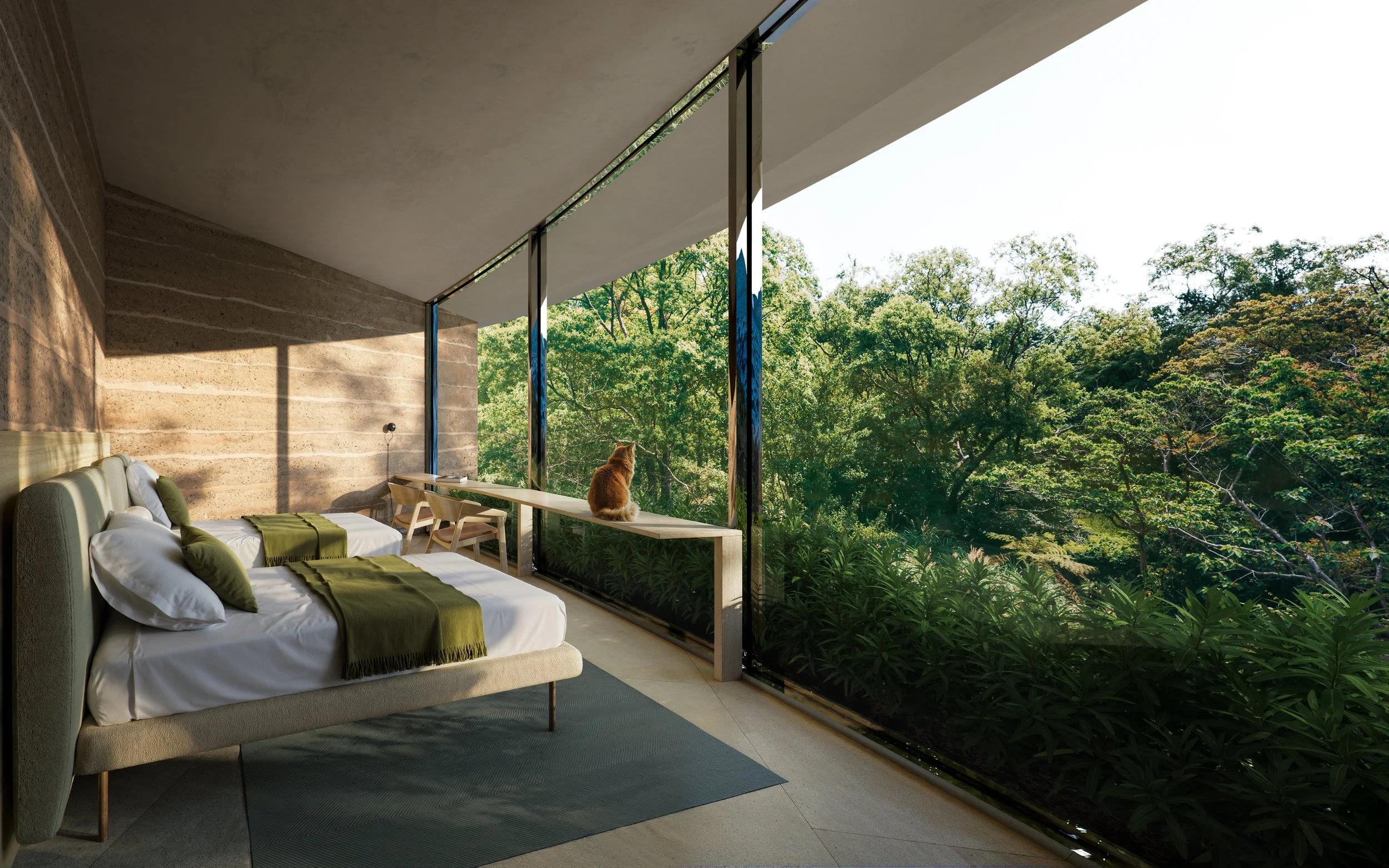
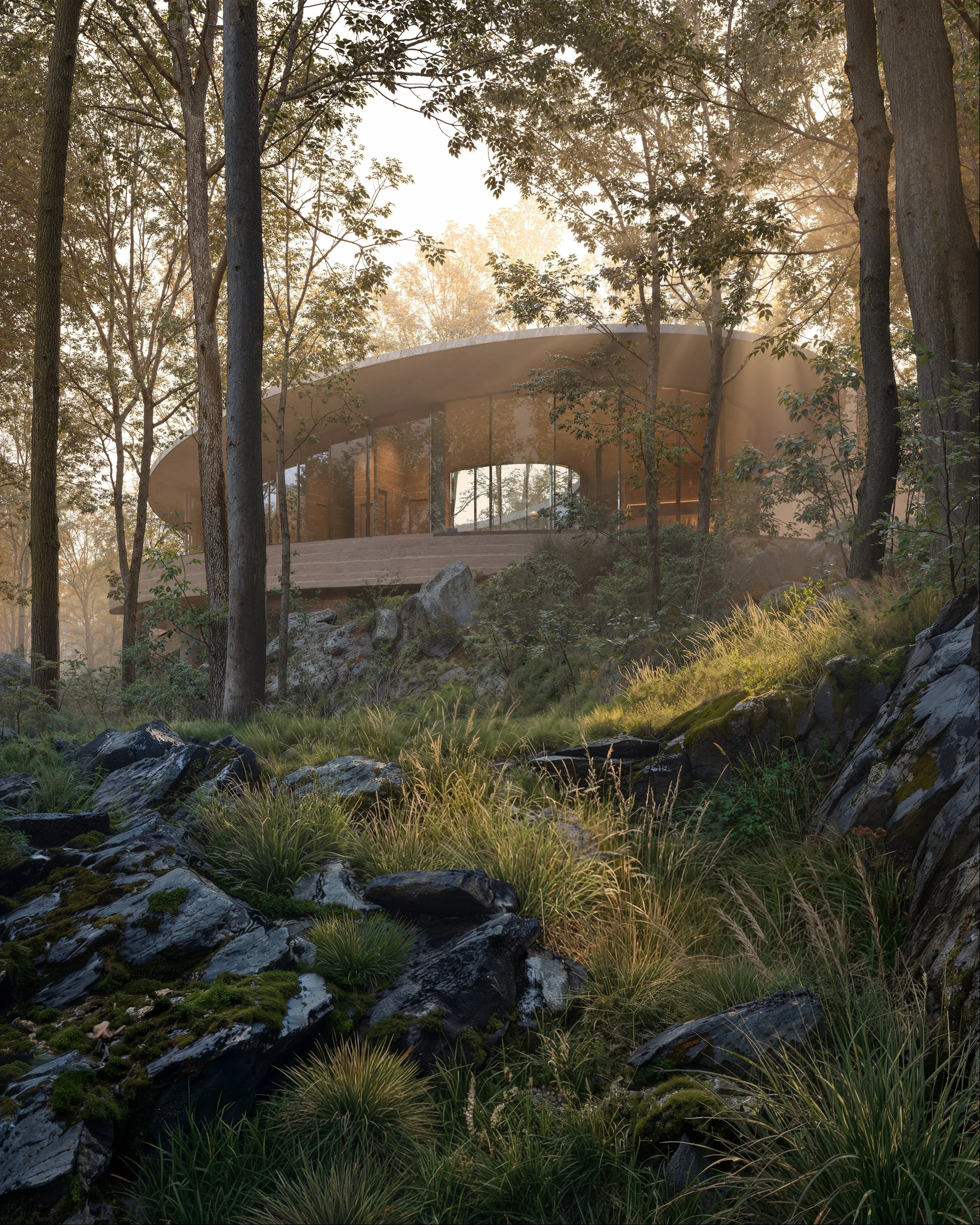
The interiors of The Horizon are conceived as immersive environments, where architecture frames the presence of landscape rather than competing with it.
Curved geometries and continuous glazing establish a panoramic relationship with the forest, dissolving enclosure and allowing the exterior to define the spatial experience. Natural materials: stone, timber, and mineral finishes anchor the interiors, creating a tactile continuity with the surrounding terrain.
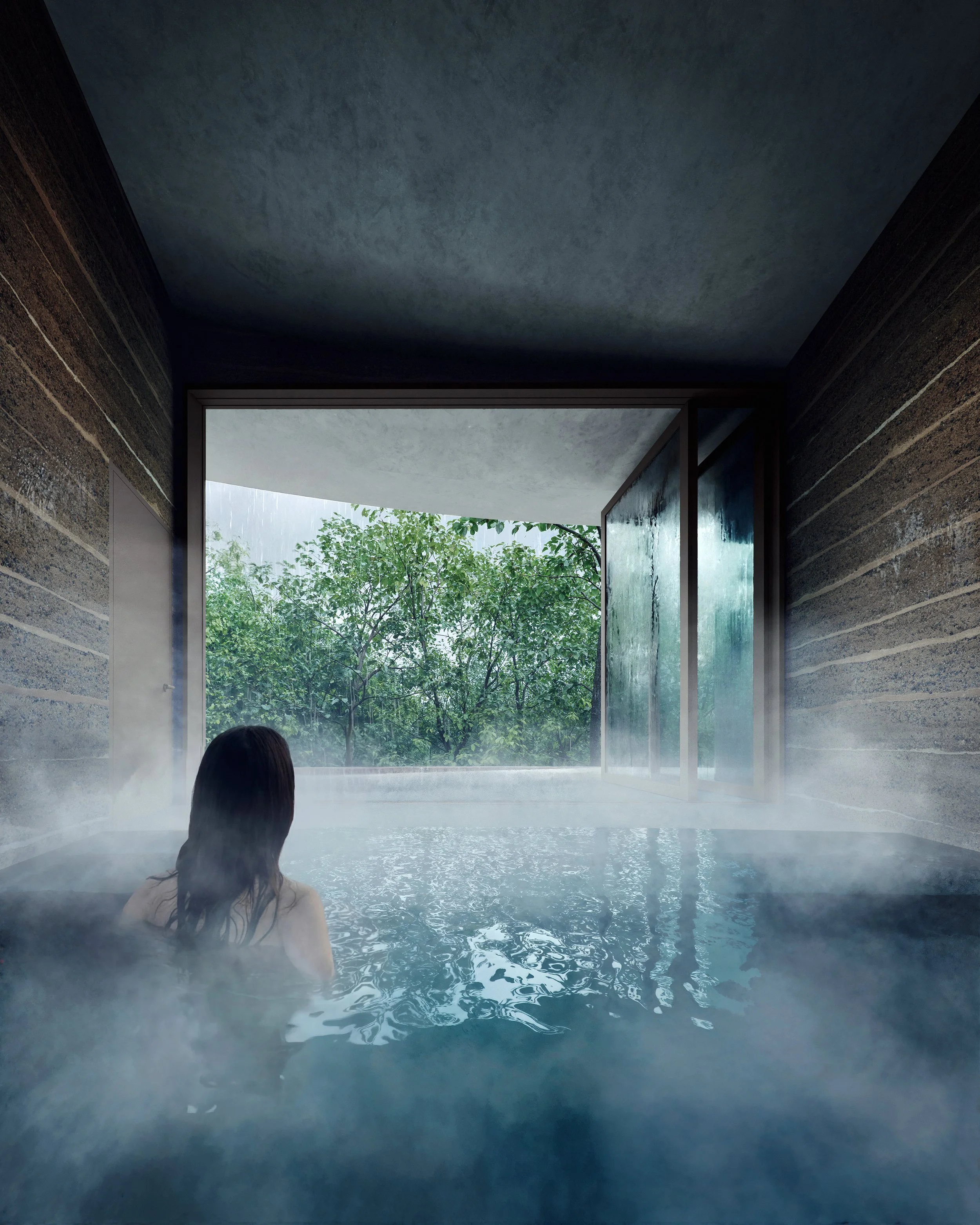
Spaces are organized with clarity and restraint. Living areas open outward in a fluid sequence, while moments of retreat, such as the bathing spaces, offer a more introspective atmosphere, where water, steam, and filtered light become central to the experience.
Light is treated as a primary material. Diffused through mist, reflected on surfaces, or framed through precise openings, it reinforces a constant dialogue between interior and climate.
The result is an architecture of atmosphere: calm, grounded, and deeply connected to its environment.