
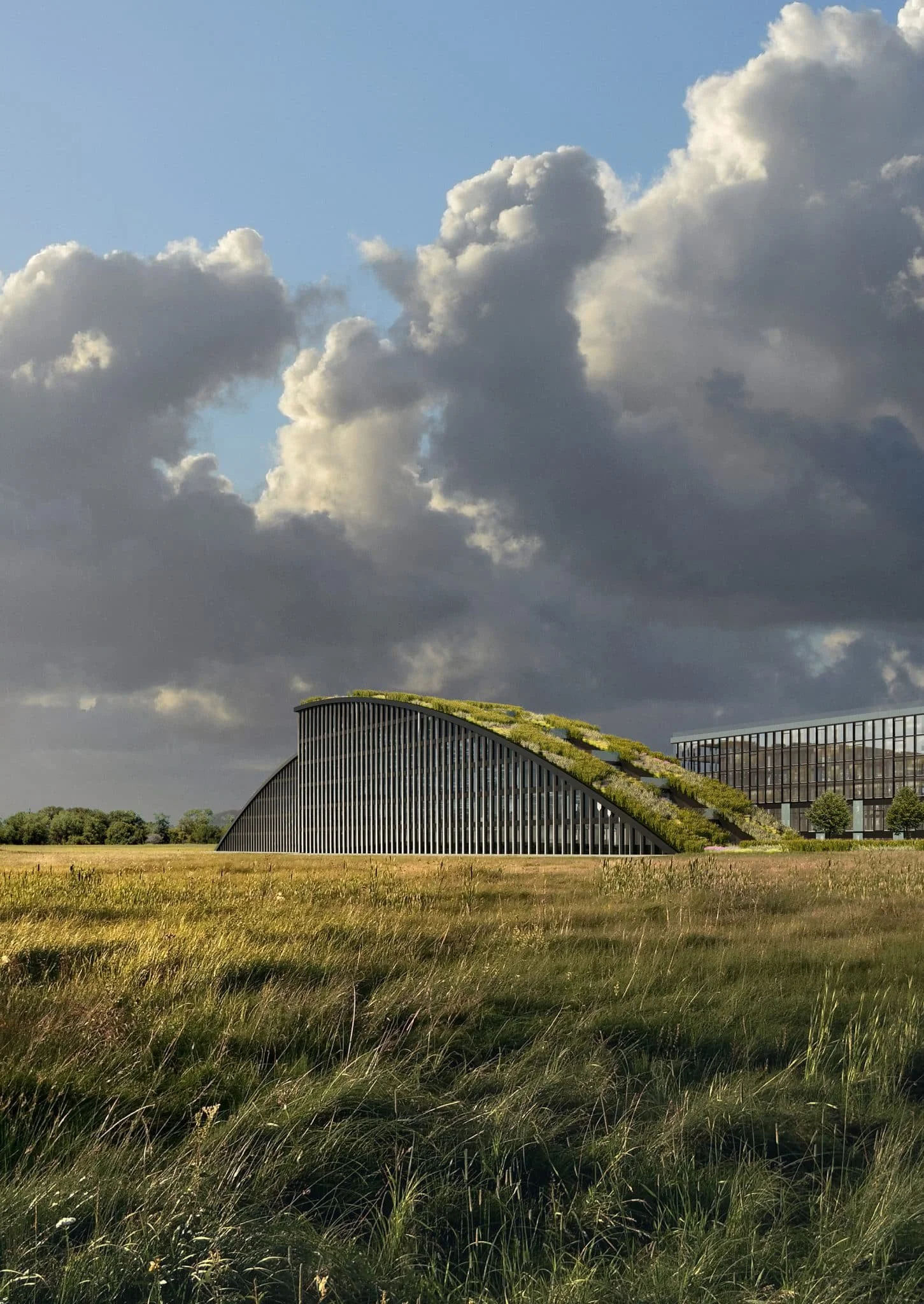
Videography
We enrich our CGI films with on-location or studio-shot footage, adding a layer of realism that gives the architecture greater presence, emotion, and credibility.
Videography:
Preliminary Phases
Videography begins with a careful reading of the project. We analyze its architecture, context, and intent to define the narrative: what the film needs to express, what it should reveal, and how the story unfolds over time.
From this, we establish a clear cinematic direction. We identify and compose key moments as a sequence of controlled views, where each frame contributes to a larger narrative structure rather than existing in isolation.
Based on this framework, we define the production approach. The tools, techniques, and resources are selected specifically for each project, ensuring that every film is tailored, coherent, and aligned with the story it is meant to communicate.
The Process
Our films often open with a wider reading of the city: situating the project within its urban context and articulating its relationship to key elements such as access, connectivity, and movement.
Where appropriate, we integrate actors into the narrative. Rather than relying on fully simulated 3D characters, we use filmed performances composited into the scenes, bringing a natural sense of scale, presence, and realism.
This approach allows us to create more engaging and human-centered imagery while maintaining efficiency in both production time and resources.
Planning and Filming
We begin by defining how the architecture is experienced: how people inhabit the space and how the camera moves through it.
Guided by the storyboard, we choreograph action, timing, perspective, and light so that live footage aligns seamlessly with the virtual environment. Each decision is made in relation to the narrative and the spatial logic of the project.
Actors are then filmed in a controlled studio setting against a green screen, with camera and lighting calibrated to match the intended scenes, ensuring precision, realism, and flexibility in the final integration.
Integration and Compositing
The green screen is carefully removed, preserving fine detail: hair, fabric edges, and natural motion through precise keying and refinement.
The extracted performances are then integrated into the rendered sequences, calibrated for scale, perspective, and spatial interaction. Contact with the environment is resolved with accuracy.
Shadows, reflections, and depth of field are reconstructed to ensure a natural presence, allowing the figures to fully inhabit the space rather than sit apart from it.
Final Film
In the final stage, the sequence is brought into alignment through color grading and cinematic post-production. Light, contrast, and atmosphere are calibrated to unify live action and CGI into a single visual language.
The result is a cohesive film where human presence is fully integrated: reinforcing realism, strengthening the narrative, and amplifying the emotional resonance of the architecture.