Sky Jade
Sky Jade, the winner of the A’ Design Award competition, is conceived as a 24-storey residential tower in Taichung, positioned in direct dialogue with the expansive greenery of Tunghai University.
Residential
Taichung, Taiwan, 2025
Sky Jade
Client
Joyce Yang Architects
Architecture
Joyce Yang Architects
Images
Panoptikon
Deliverables
CGI Stills
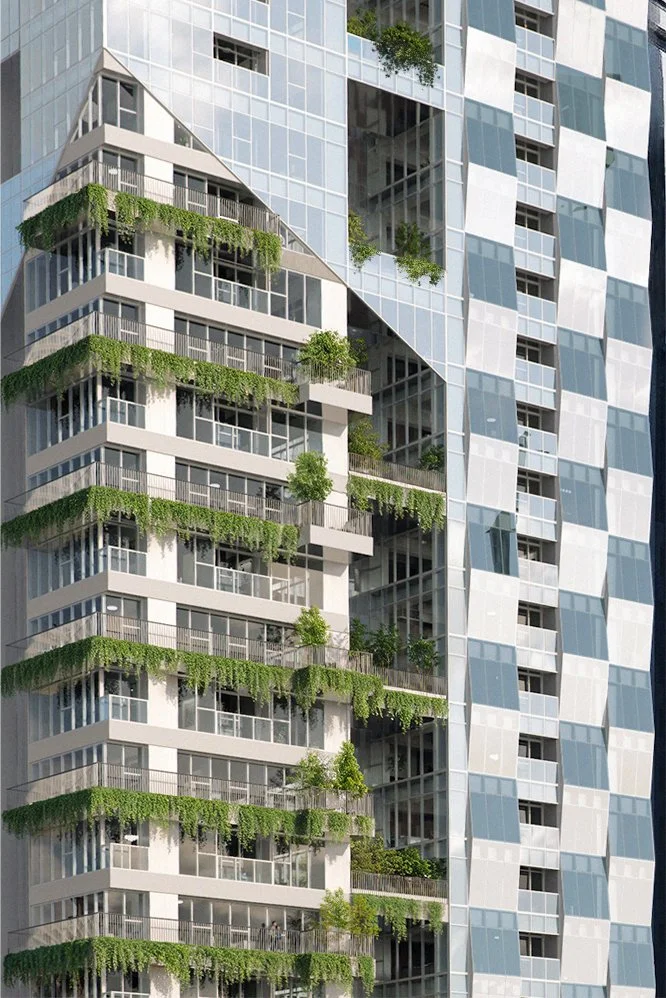
Sky Jade in Taichung is built around a single decision: to prioritise landscape over built mass, and to treat greenery as the defining architectural expression of the project.
We were commissioned by Joyce Yang Architects to develop a series of marketing visuals that communicate both the architectural form of the project and the atmosphere it creates within its urban context.
Form, Light, and Perception
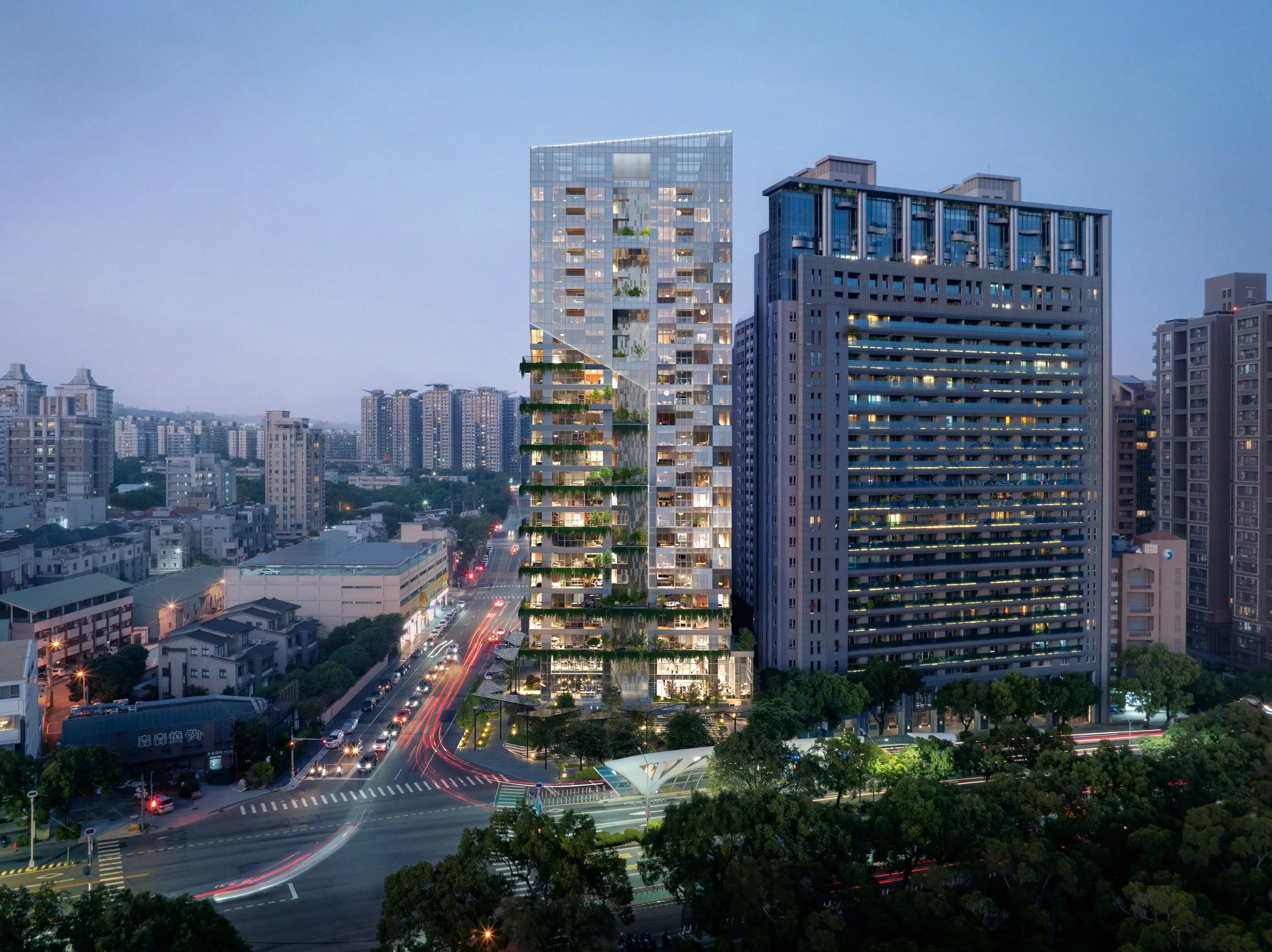
Our early explorations centred on one question: which views said the most about the building's dynamic glass facade.
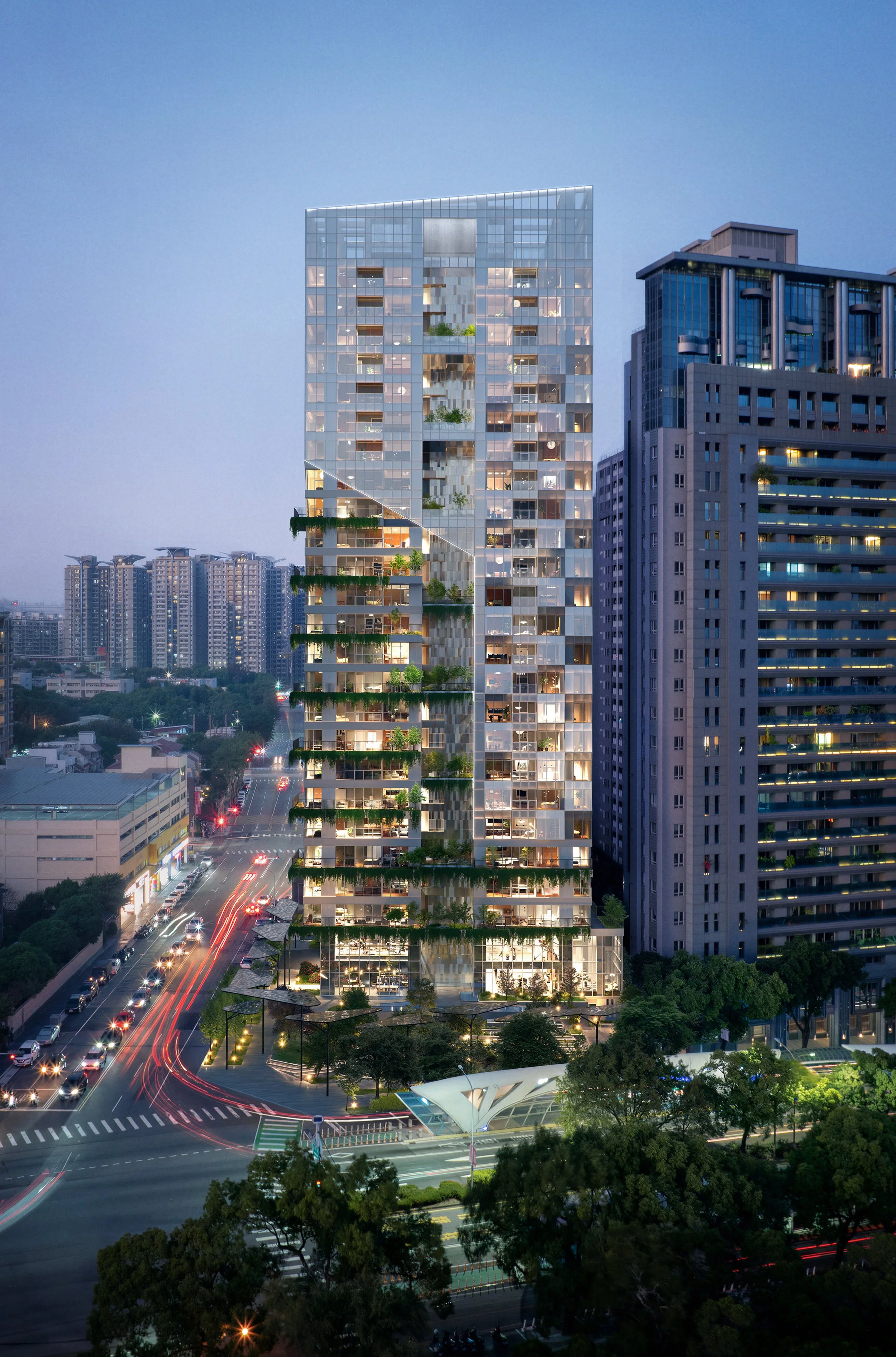
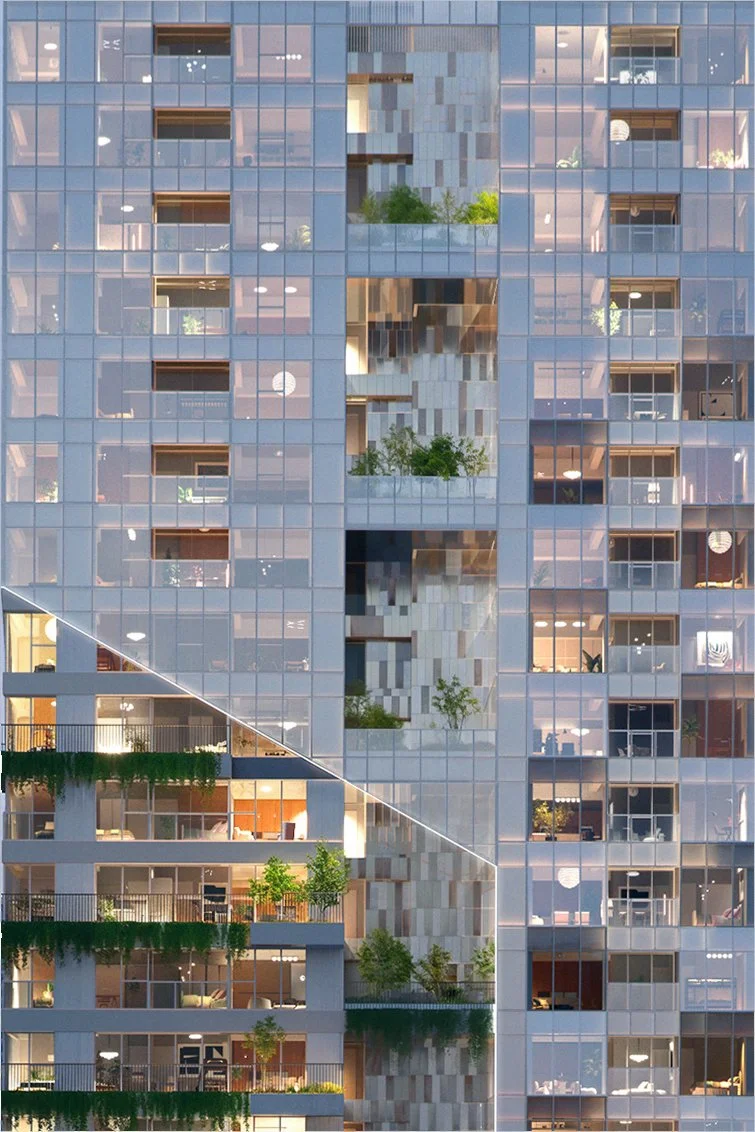
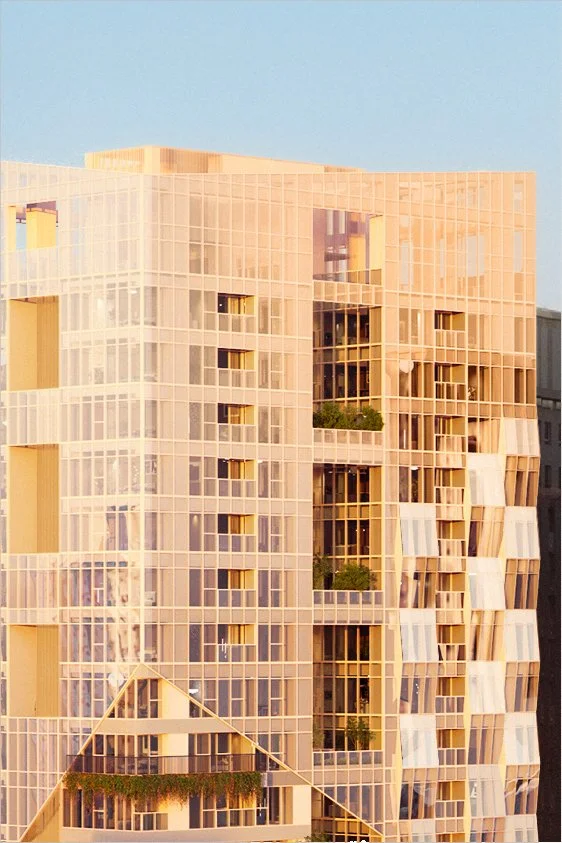
The 7-degree inclined glass surface introduces a faceted geometry that shifts with light, weather, and the city around it, and finding the views that best express that quality drove our compositional decisions.
Each image captures the building at a specific moment: light, weather, and time of day are all active participants in the composition.
Early studies explored how that transformation could be articulated through image-making, with particular attention given to moments where light operates as a material in its own right: diffused through mist, caught across faceted glass, framed through controlled openings.
A Vertical Landscape System
A key aspect of the visual narrative was the relationship between the building and the landscape.
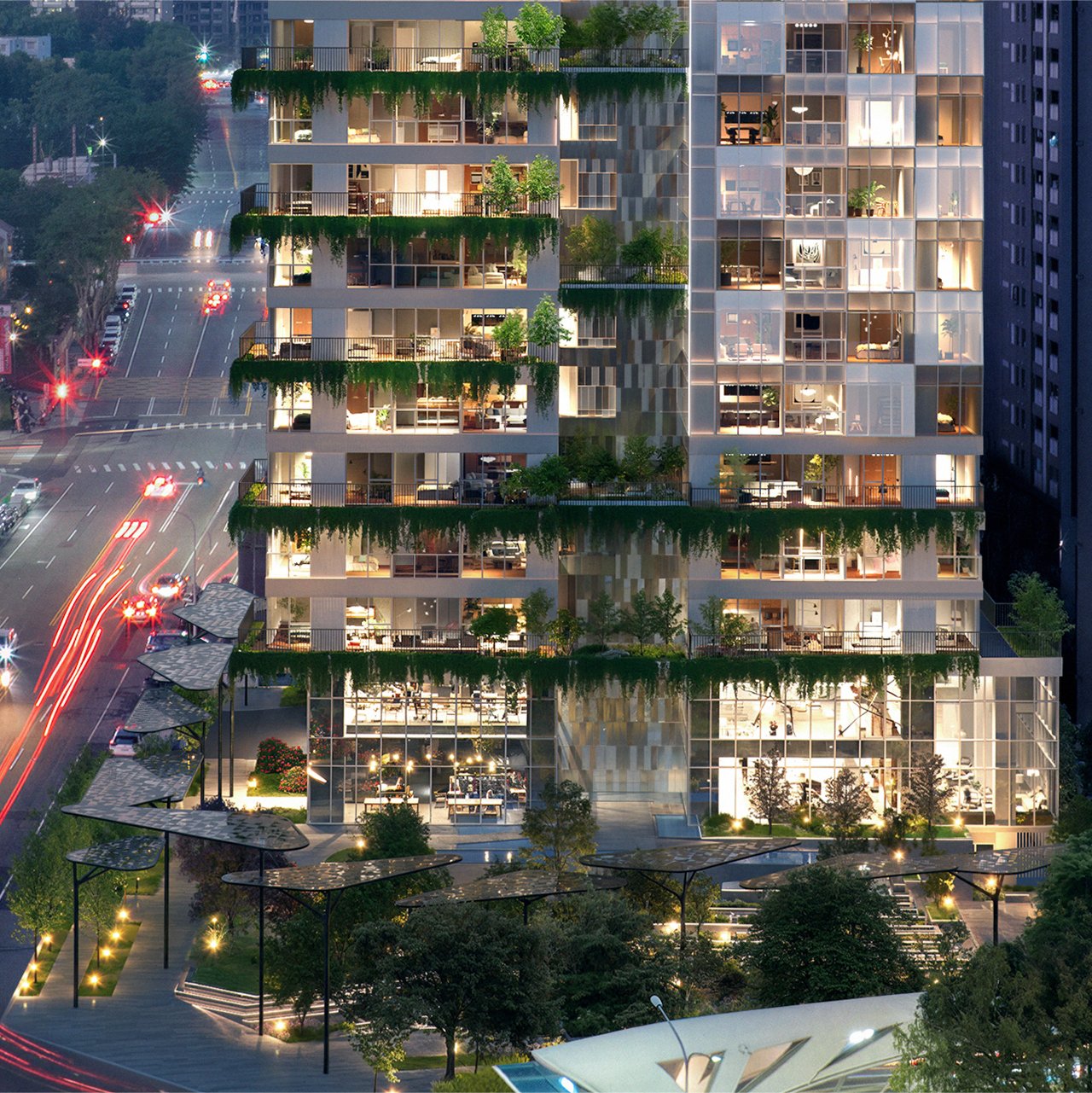
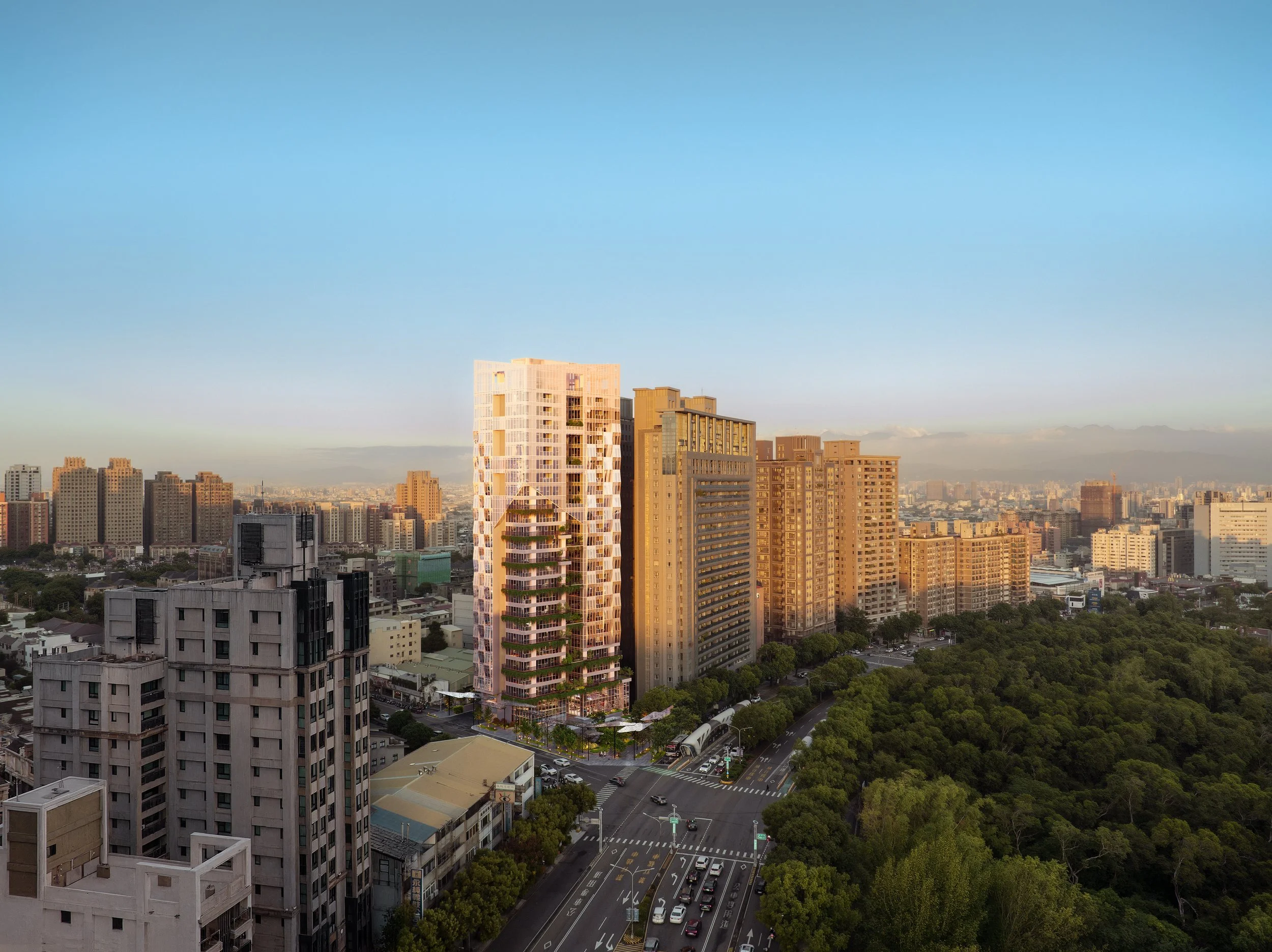
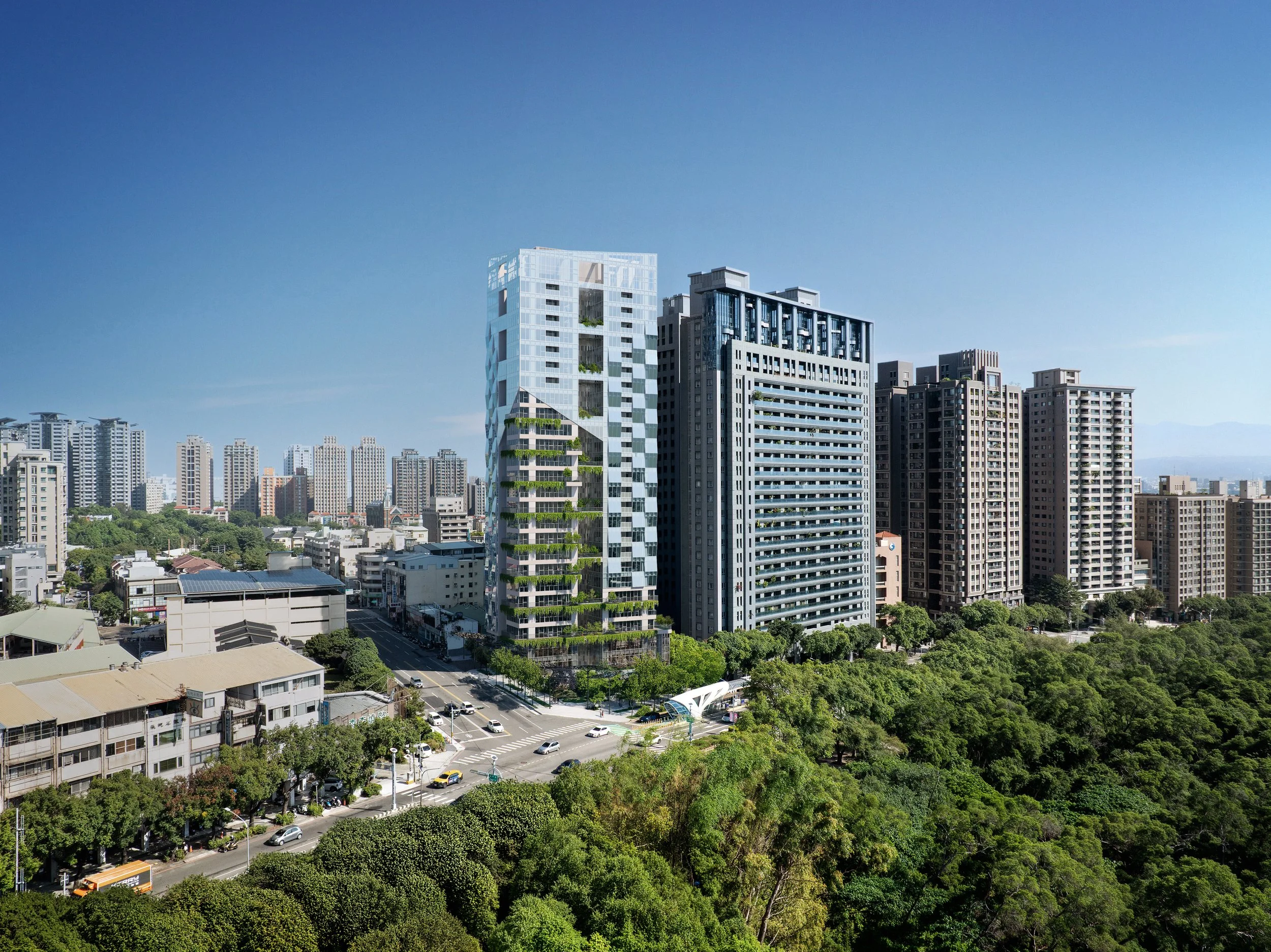
A hero aerial view was developed to frame the architecture in direct dialogue with the surrounding forest: the building does not impose onto the site, but appears to rise from it, anchored within a continuous field of greenery that establishes both scale and context. Landscape and built form read as one.
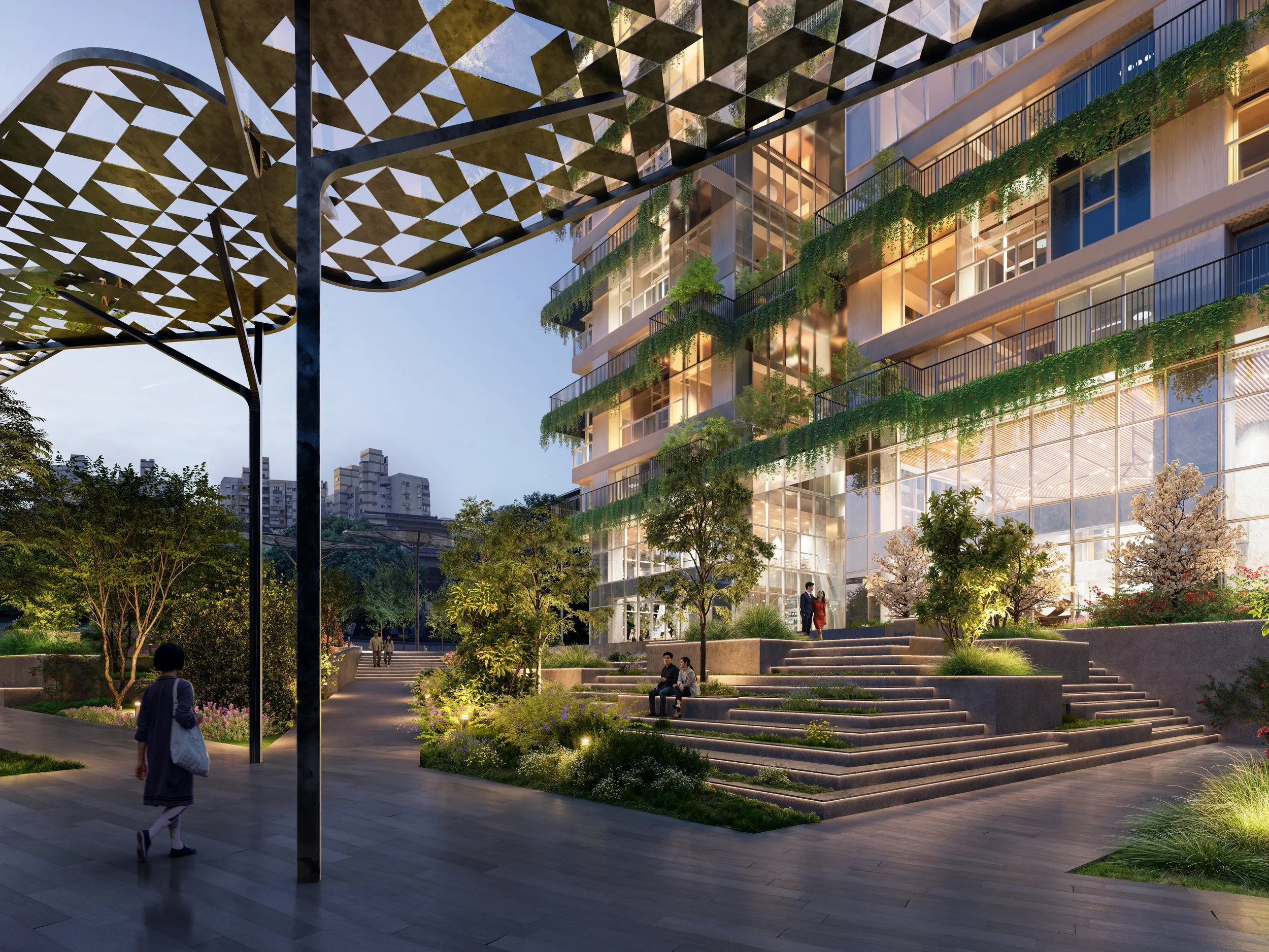
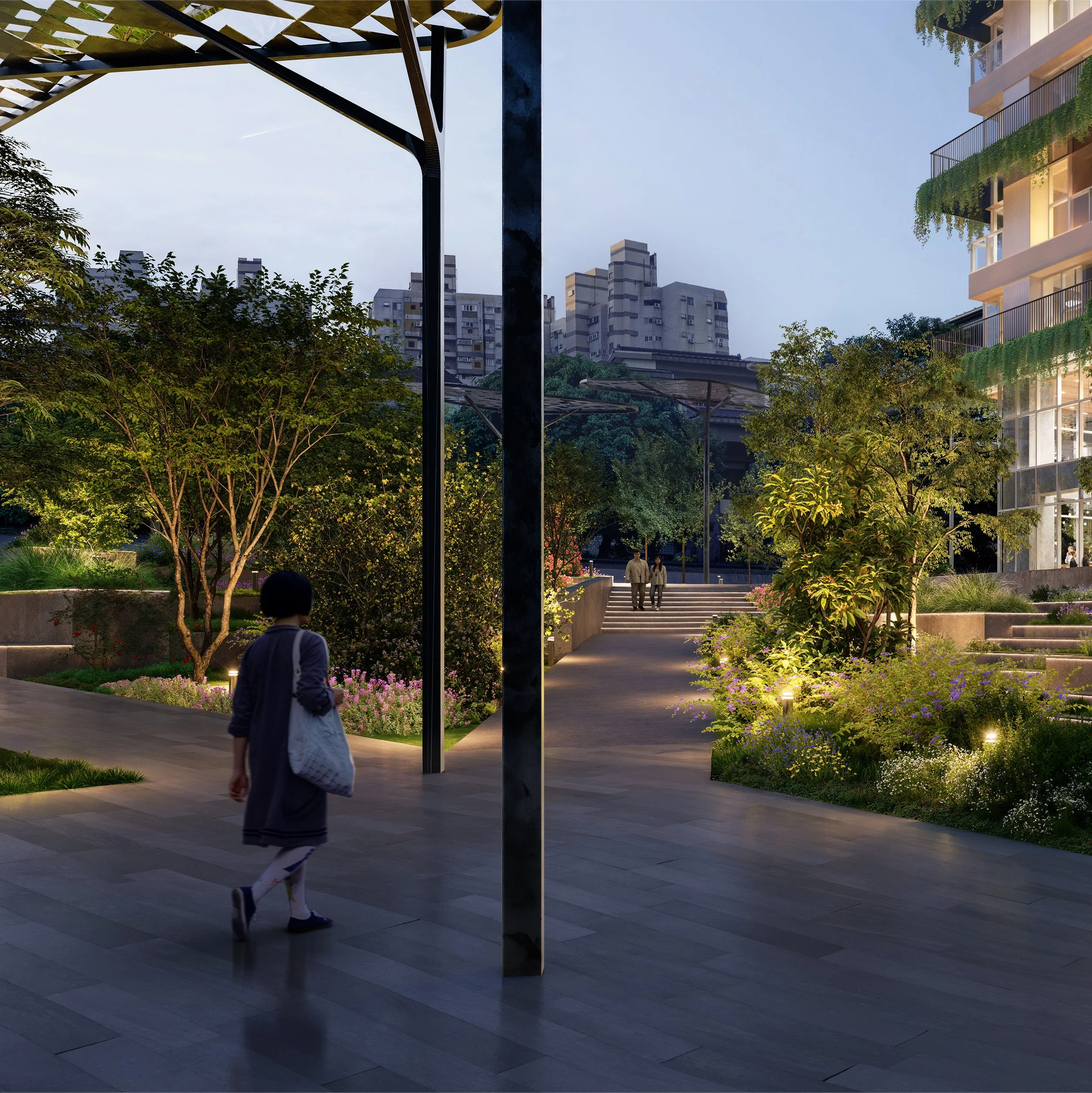
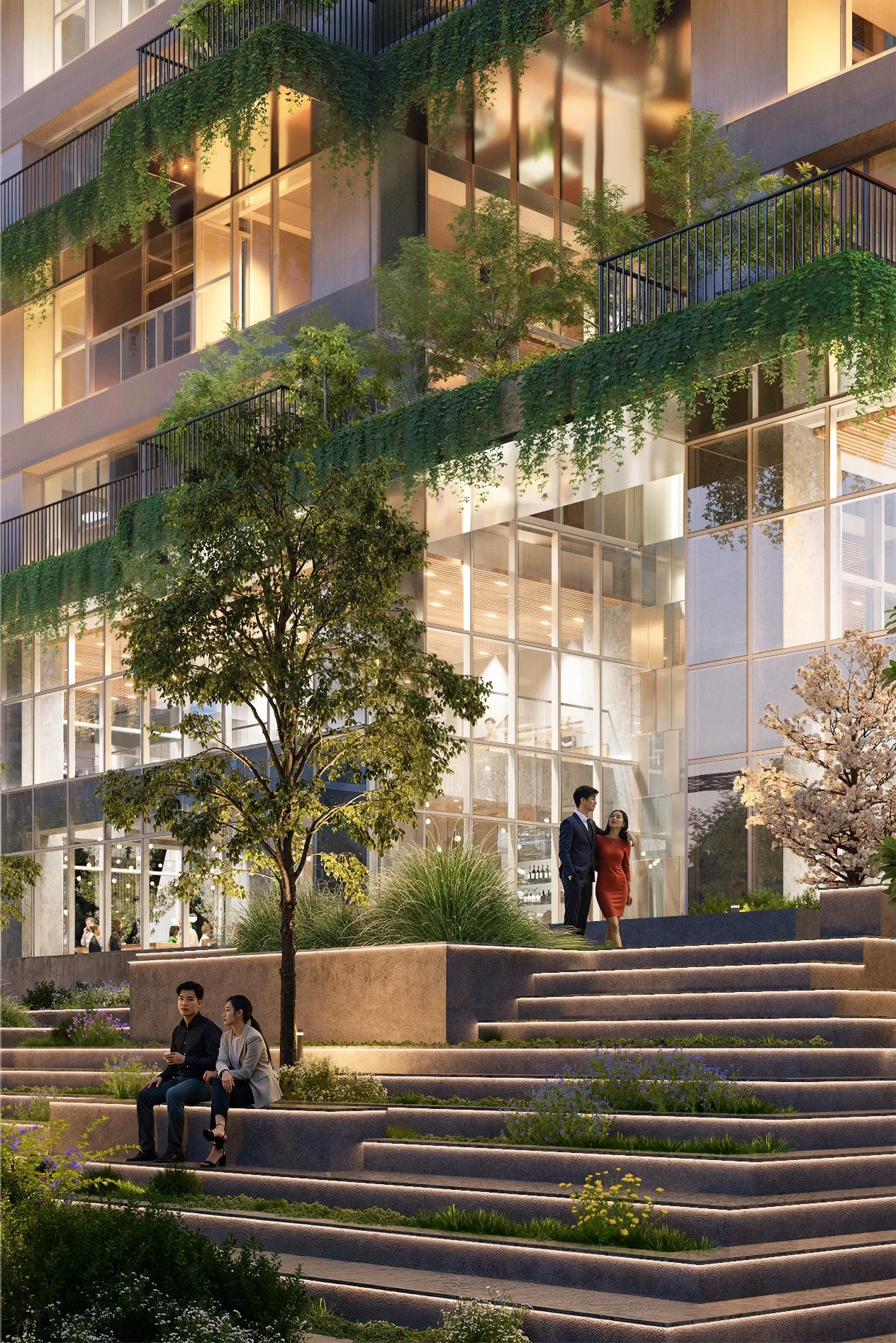
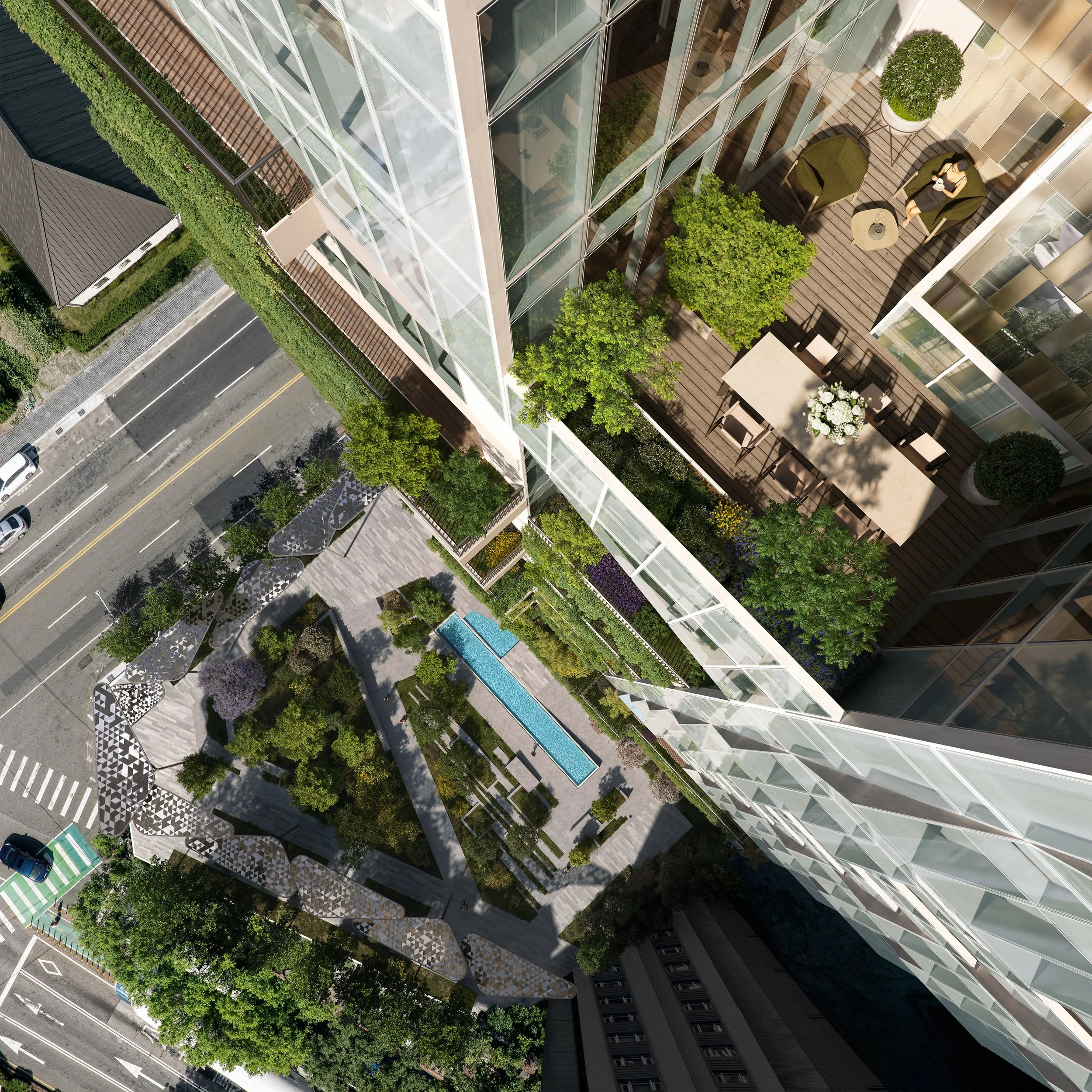
The relationship extends to the ground level, where vegetation flows into a terraced public plaza that draws the landscape of the adjacent university campus directly into the project.
Two key images were developed to capture this: an eye-level view from within the plaza, framing the building as it rises through the surrounding greenery, and a top-down aerial that reveals the layered spatial logic of the terraces as they unfold across the site.