Sky Jade
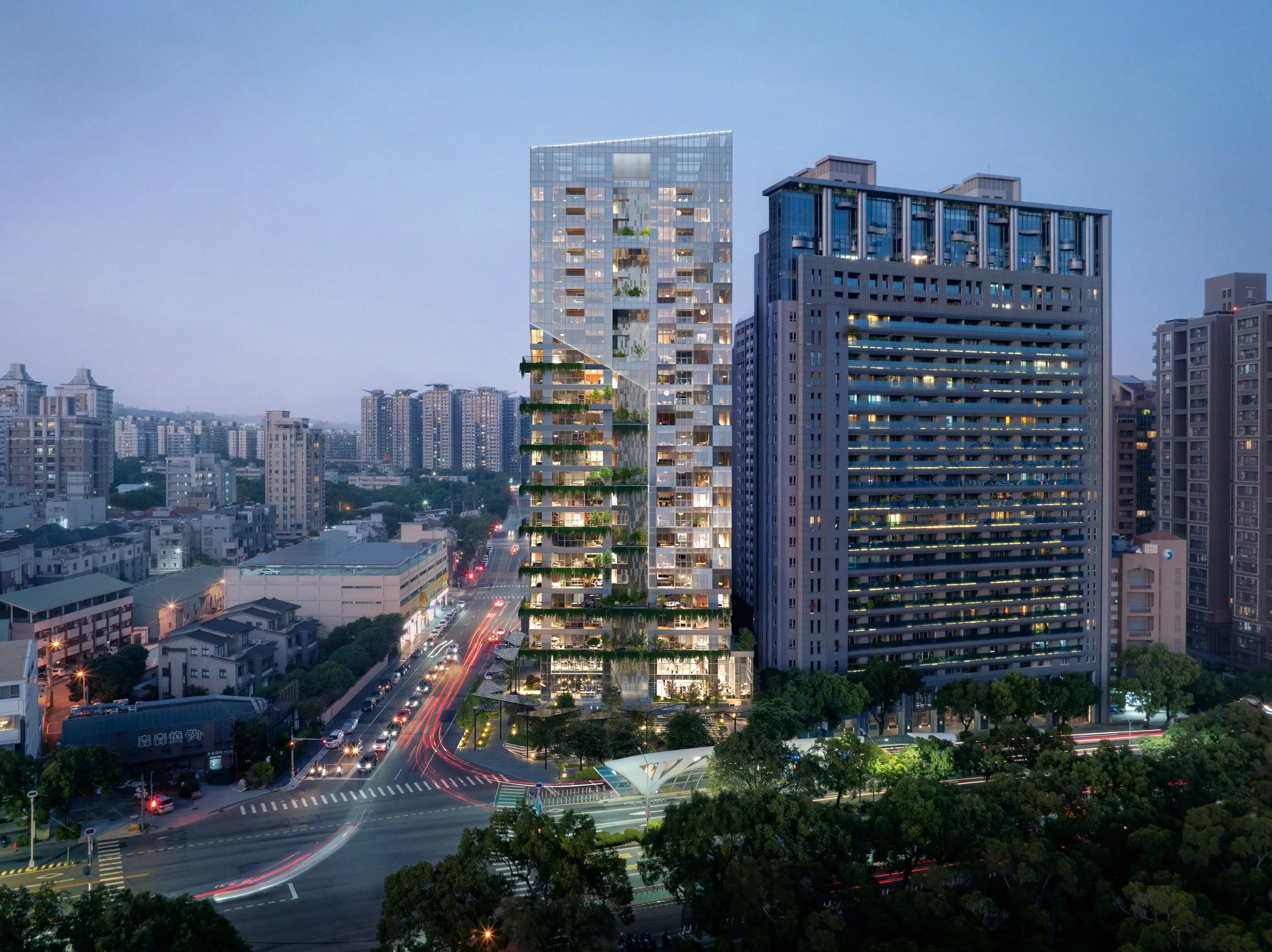
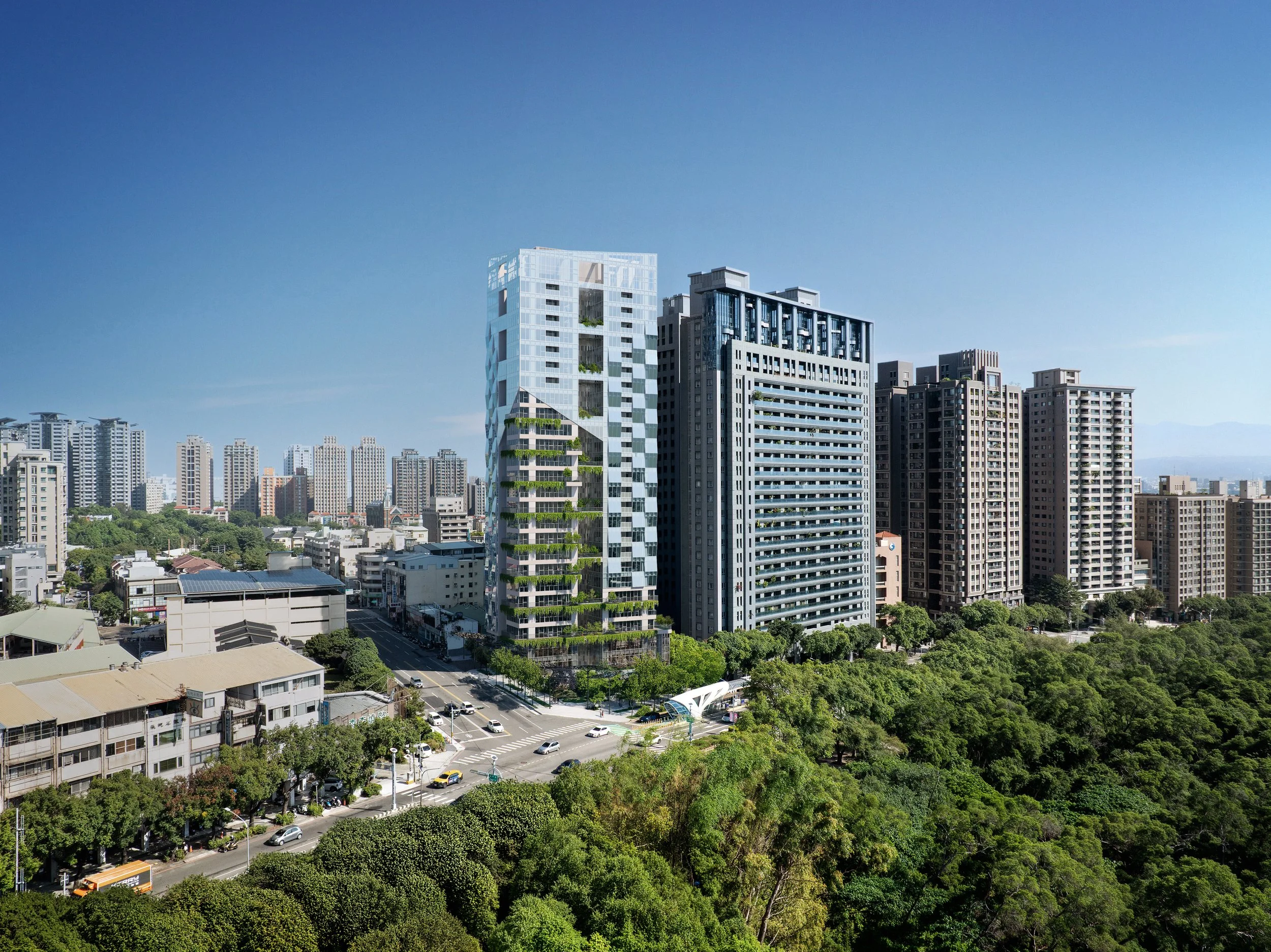
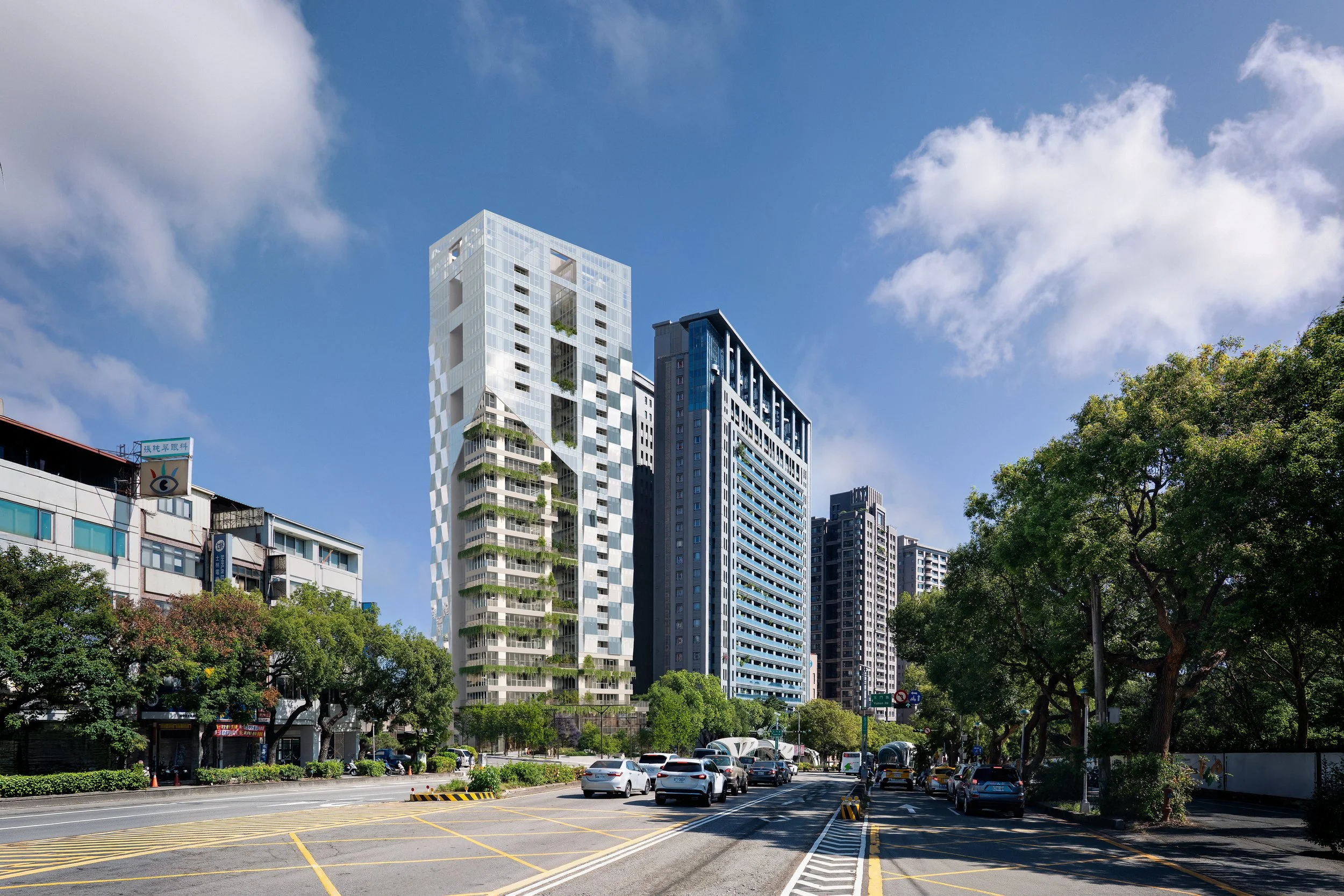
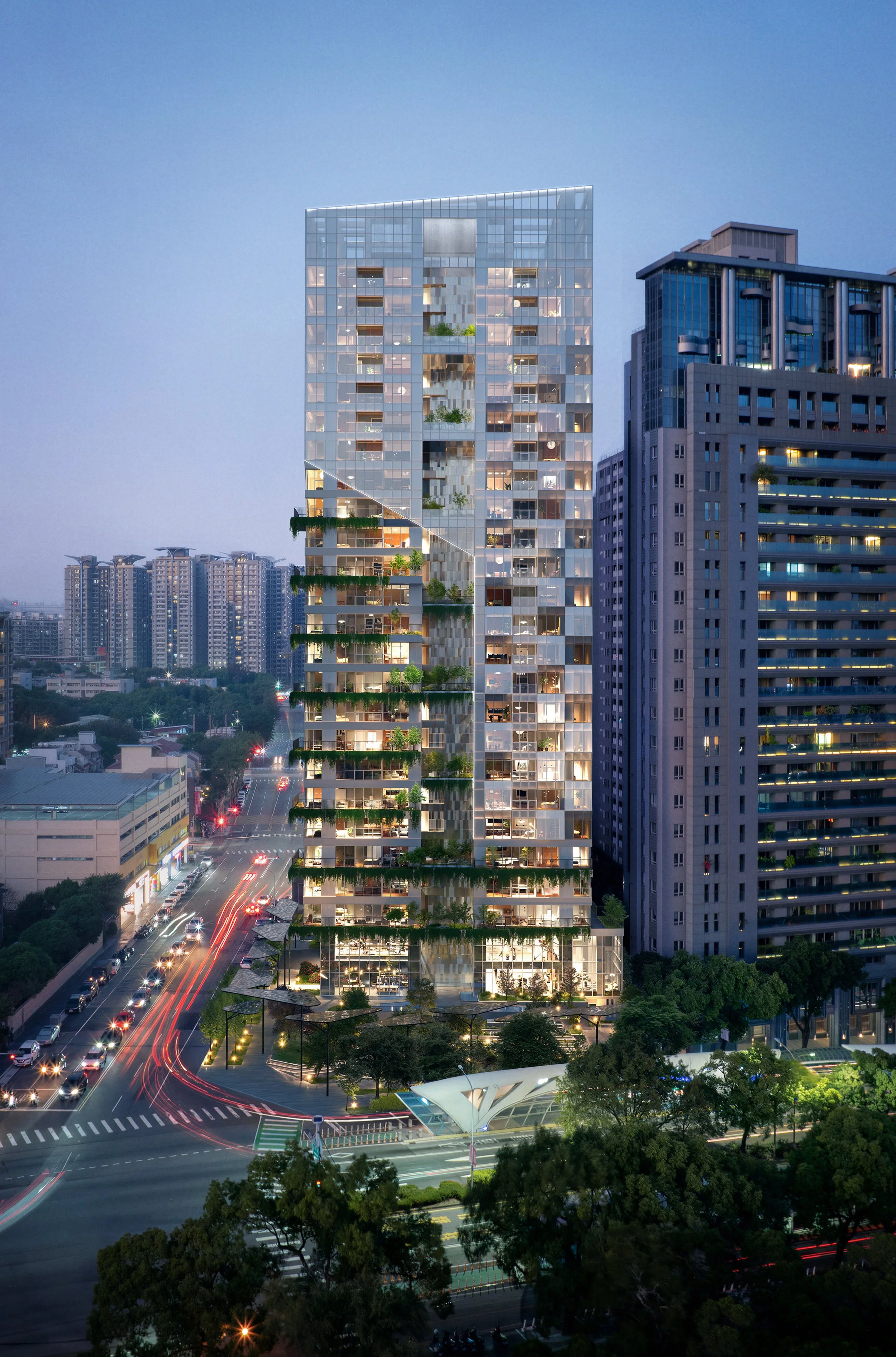
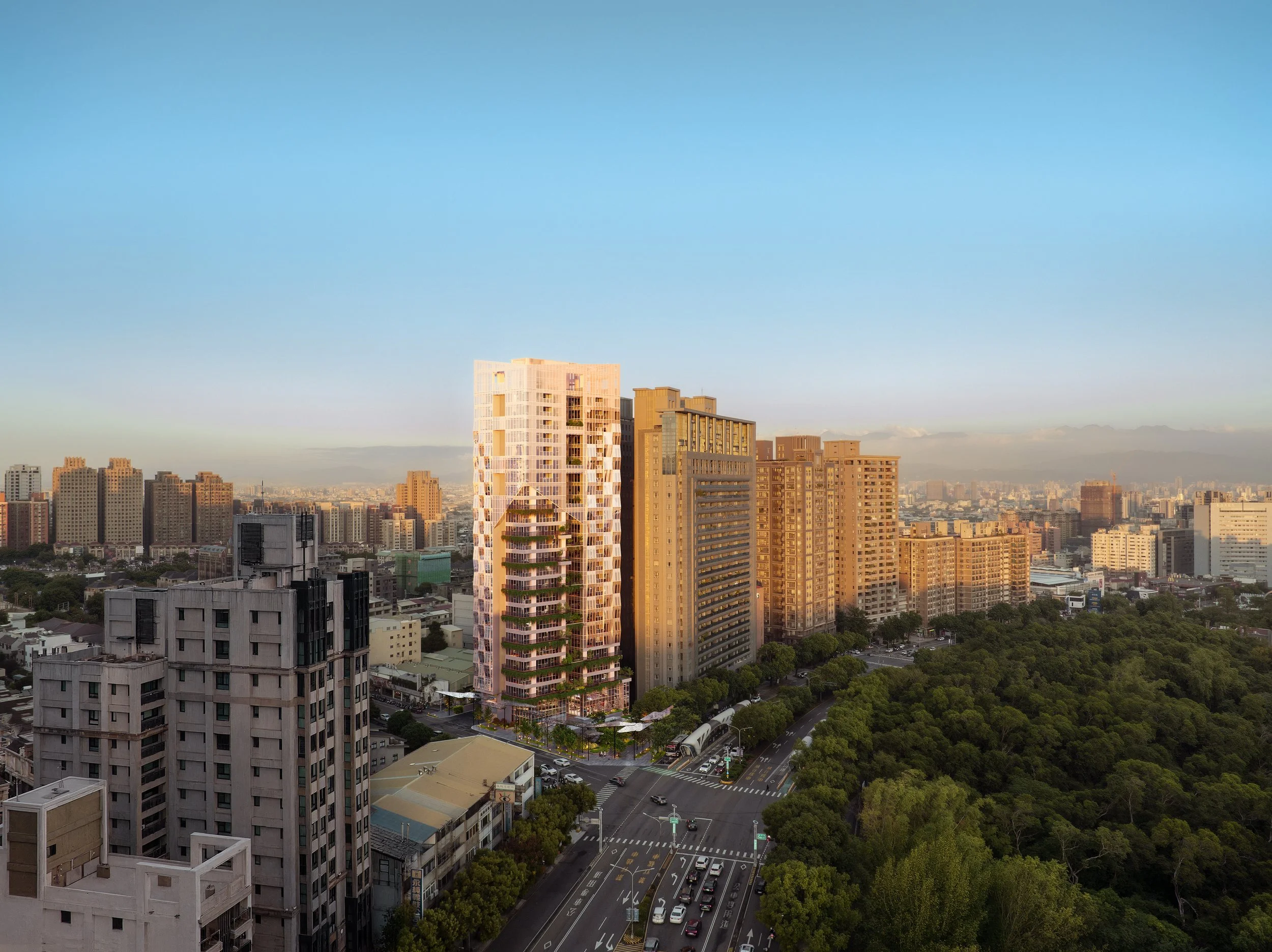
Sky Jade, the winner of the A’ Design Award competition, is conceived as a 24-storey residential tower in Taichung, anchored by a single commercial presence at ground level and positioned in direct dialogue with the expansive greenery of Tunghai University.
Residential
Taichung, Taiwan, 2025
Sky Jade
Client
Joyce Yang Architects
Architecture
Joyce Yang Architects
Images
Panoptikon
Deliverables
CGI Stills
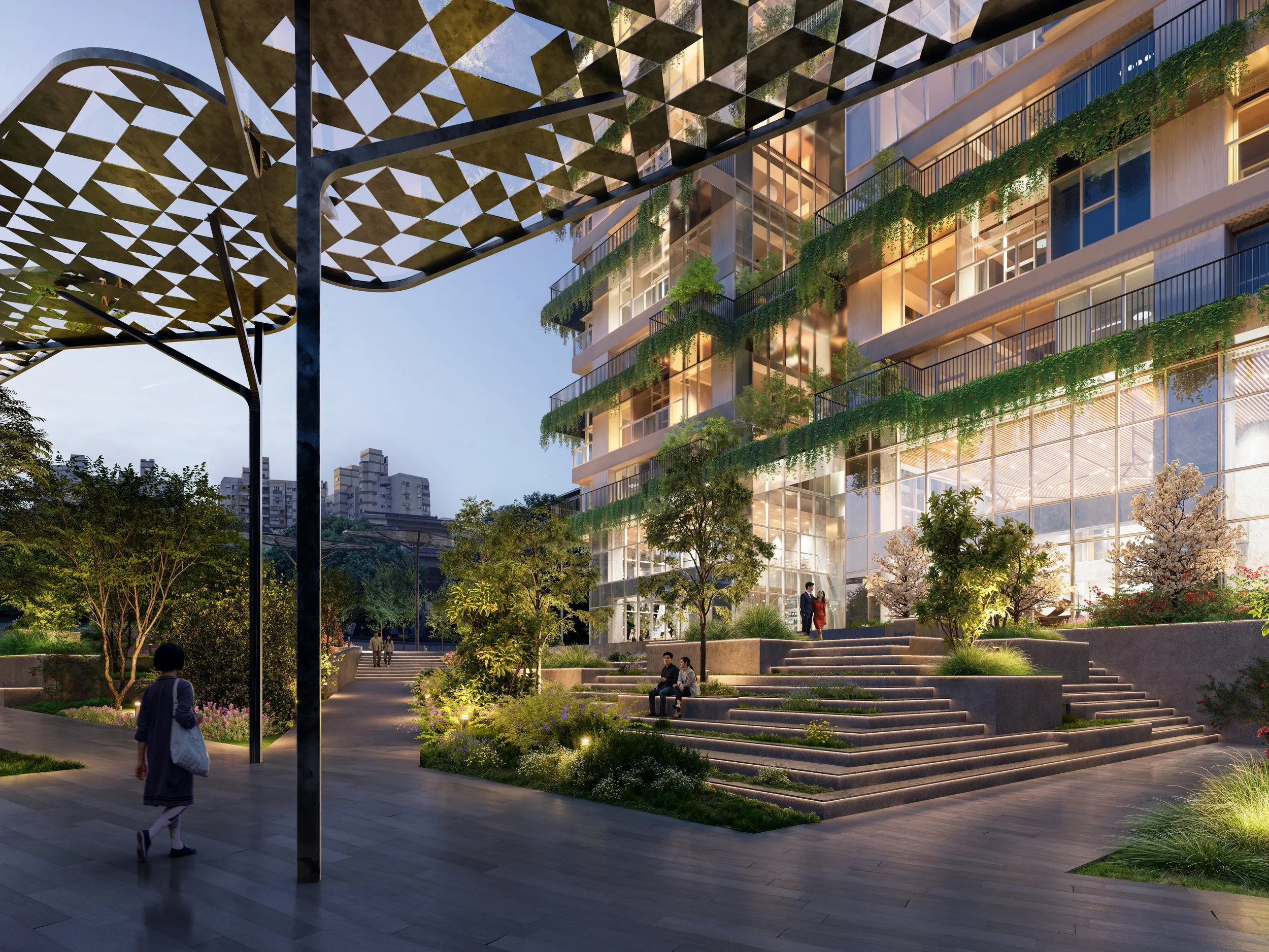
Located in Taichung, Sky Jade redefines residential development through a clear prioritization of landscape over built mass, preserving greenery and elevating it as a central architectural expression.
A 7-degree inclined glass façade introduces a faceted, fluid geometry, where light, weather, and reflection continuously reshape the building’s presence. The result is a dynamic exterior that evolves with its environment.
By integrating advanced digital construction methods with a focus on sustainability, low-carbon strategies, and a synthesis of art and nature, Sky Jade positions itself at the forefront of a new architectural paradigm.
A Vertical Landscape System
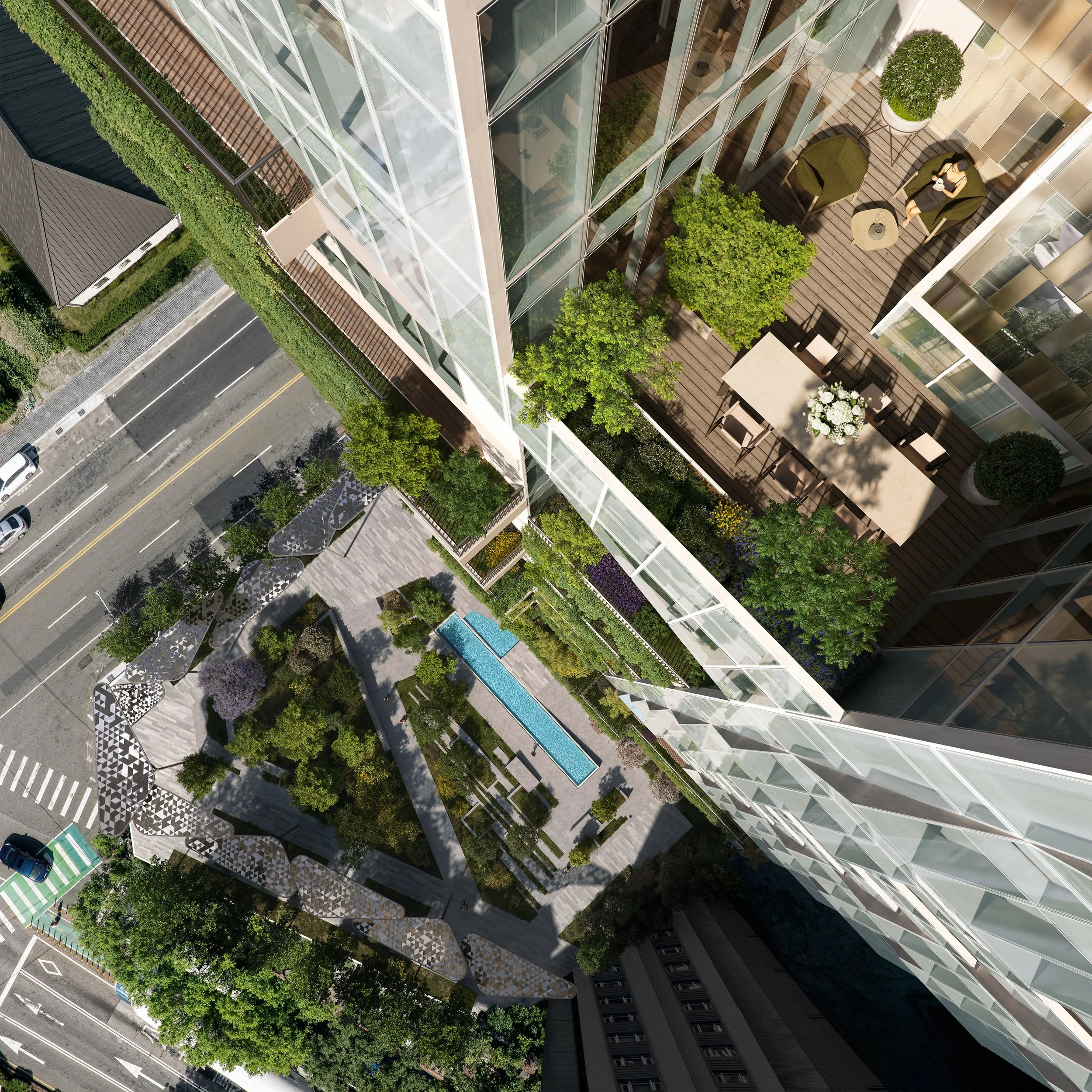
The project extends the greenery of the university campus into the urban fabric, bringing landscape across the street and embedding it within the architecture. Vegetation is treated as a continuous system, rising along the façade and merging with the building envelope to form a layered, three-dimensional green presence.
At its base, the building establishes a clear urban response through a grounded, solid mass. Above, this transitions into a lighter, fully glazed façade, shifting from conventional construction toward a more open, transparent expression.
The glass envelope is articulated through subtle variations in angle, allowing it to capture light and reflect the surrounding city throughout the day. This continuous transformation situates the building within its context, while reinforcing a dynamic and evolving architectural identity. Light is treated as a primary material. Diffused through mist, reflected on surfaces, or framed through precise openings, it reinforces a constant dialogue between interior and climate.